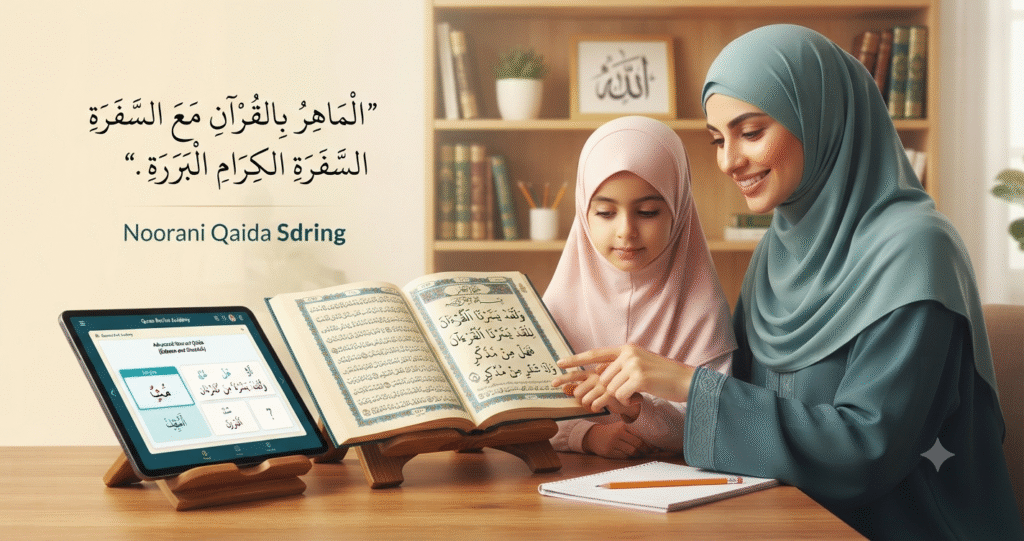
It is late Friday evening, and you are reviewing your child’s progress in their Quran lessons. They have finally mastered the short vowels, but now you find yourself asking, “What comes next?” As a parent raising children in the West, balancing school, sports, and Islamic studies is a constant challenge. You want to ensure their momentum doesn’t fade, and that is why understanding a roadmap for the next steps in Noorani Qaida is essential for their long-term success. By knowing what lies ahead, you can better support your child as they transition from basic phonics to the beauty of reading the Mushaf. For families seeking structured guidance, Quran Reciter Academy acts as a trusted resource, providing the expert support needed to navigate these critical milestones with ease and confidence.
The Divine Path of Seeking Quranic Knowledge
The journey of learning the Quran is one of the most noble endeavors a believer can undertake. It is a commitment that spans a lifetime, beginning with the foundational steps of the Noorani Qaida.
“The best among you are those who learn the Quran and teach it.” (Sahih Bukhari 5027)
Khairukum man ta’allamal-qur’ana wa ‘allamahu.
For a Muslim parent in the West, this Hadith is a powerful reminder that your efforts are not merely an extracurricular activity. When you help your child progress through their lessons, you are cultivating a connection to the Divine that will serve as their moral compass. In an environment where Islamic values can sometimes feel isolated, raising a child who can recite the Quran with care and respect is a profound act of worship.
This path is not about perfection on day one; it is about the consistency of the effort. By viewing these next steps not as a checklist, but as a spiritual progression, you shift the focus from academic pressure to the joy of drawing closer to Allah. Your role is to provide the space and the guidance, trusting that each step is a building block for their lifelong relationship with His words.
Navigating a roadmap for the next steps in Noorani Qaida
Once your child has mastered basic vowels, they are ready for the next level: Sukoon and Shaddah. These are the connectors of the Arabic language. If vowels are the heartbeats, then Sukoon (the absence of a vowel) and Shaddah (the doubling of a letter) are the joints that give the words their strength.
When you look at Noorani Qaida progression, remember that this phase is designed to build phonetic stamina. Your child is moving from simple “stop-and-go” reading to flowing through syllables. This is the stage where “reading” turns into “reciting.”
Comparison of Qaida Learning Methods
| Feature | Physical Workbook | Online Interactive Platform | Private 1-on-1 Tutoring |
| Feedback Timing | Delayed | Immediate (Automated) | Immediate (Human) |
| Engagement Level | Moderate | High | Very High |
| Pacing Control | Fixed | Student-led | Instructor-led |
| Tajweed Accuracy | Difficult to verify | Standardized | Expert-verified |
| Accessibility | Limited to location | Anytime/Anywhere | High (Flexible) |
Developing confidence through structured Quran reading steps
As your child advances, advancing in Quran reading levels requires more than just knowing the rules; it requires building a habit of reflection. Research in early childhood education emphasizes that children learn complex phonetic rules better when they are presented in small, digestible chunks followed by immediate application. According to a 2024 report on digital educational efficacy, students who receive personalized, consistent feedback from a mentor are 40% more likely to maintain their interest in long-term study programs.
- Always encourage your child to read at a slow, deliberate pace that allows them to focus on each letter’s articulation.
- Incorporate five minutes of “listening time” daily where they hear a professional reciter, which helps train their ears to identify correct pronunciation.
- Use a physical pointer or your finger to follow under the words, as this helps maintain their visual focus on the line they are reading.
- Celebrate the mastery of each new lesson, such as the introduction of Madd (stretching sounds), to keep their motivation high.
- Ensure that their practice environment remains free from distractions, like screens or loud noises, to allow for full concentration.
- Ask your child to explain the rule they just learned back to you, which is a proven method for deepening their own understanding.
Transitioning to the Mushaf: A milestone for your child
When the time comes to move from the Qaida to the actual Quran, the transition should be celebrated. This is a significant moment that marks the transition from “learning to read” to “reading the word of Allah.”
For example, Sarah, a mother in London, felt overwhelmed when her daughter reached the end of the Qaida. Instead of pushing her into a full Surah, they spent two weeks practicing only the opening verses of Surah Al-Fatiha. By focusing on applying the rules she learned in the Qaida to the actual Mushaf text, her daughter gained the confidence to recite beautifully, turning her anxiety into excitement.
Follow this path to ensure a smooth transition:
- Review the Foundation: Before opening the Mushaf, spend one week reviewing the most difficult rules from the Qaida to ensure they are solid.
- Start Small: Choose a short, familiar Surah from the Juz Amma to begin the transition, as this builds immediate confidence.
- Focus on Tajweed: Even if the pace is slow, prioritize the correct application of Tajweed rules over the speed of reading.
- Daily Consistency: Maintain the same daily time slot for reading the Mushaf that you used for the Qaida, as routine is the best teacher.
Important: Quick tip for parents: Always keep a beautiful, clear-print Mushaf available for your child to see and touch. Familiarity with the book itself, even before they are fully fluent, fosters a deep, subconscious love and respect for the Quran in their hearts.
Why expert guidance matters in Noorani Qaida advancement
Choosing the right partner for this journey can make all the difference. While self-study tools are available, the nuances of Tajweed—the delicate balance of sounds—are best corrected by a trained ear.
According to studies in language acquisition, a child’s ability to replicate phonetic sounds peaks in early childhood. By utilizing professional guidance, you ensure that these sounds are formed correctly from the start. This prevents the need to “re-learn” or “un-learn” habits later on, allowing your child to progress with grace and accuracy.
Frequently Asked Questions
H3: How long should my child stay in Noorani Qaida before moving to the Quran?
There is no fixed timeline, but moving to the Quran is recommended once they can identify letters, vowels, and basic Sukoon combinations with confidence. It is better to have a solid foundation than to rush into the Quranic text unprepared.
H3: Are there signs that my child is ready for the next level?
Yes, look for their ability to recognize words without sounding out every single letter individually. When they begin to flow through common word patterns without pausing, they are ready for more complex material.
H3: How can I manage the transition if my child finds it difficult?
Patience is your greatest tool, so keep the sessions short and positive. If they struggle, go back one step to the Qaida to reinforce the specific rule they are having trouble with, then try the Quranic text again.
H3: How does Quran Reciter Academy help with this roadmap?
We offer personalized pathways that ensure your child moves at a pace that is challenging but never discouraging. Our tutors focus on closing any “technical gaps” from the Qaida to make the transition to the Mushaf feel natural.
H3: What if my child loses interest during this phase?
This is common, so focus on the why of their learning. Remind them of the beauty of the Quran and the reward of their efforts, and perhaps shorten practice times while increasing the positive reinforcement you provide.
Conclusion and Call to Action
To wrap up, remember that the roadmap for the next steps in Noorani Qaida is a journey of patience, consistency, and love. Three key takeaways to keep in mind are: build a solid foundation before rushing, prioritize correct Tajweed over reading speed, and keep the environment positive and encouraging. Your commitment today is an investment in your child’s spiritual character, ensuring they carry the light of the Quran with them throughout their life.
If you are looking for a partner to support your child’s growth, Quran Reciter Academy is here to help. We invite you to book a free trial Quran class today to experience how our certified tutors can guide your child through every milestone. May Allah make it easy for you and your family to raise children who love His Book.